


A practical guide to privacy, price, social life and everyday student living
Choosing student accommodation can feel surprisingly personal. You are not simply comparing floor plans; you are deciding how you want to live, study, cook, relax and meet people for an entire academic year. For many students, the final shortlist comes down to two popular room types: an ensuite room or a private studio.
Both options give you your own bedroom and bathroom, but the similarities mostly stop there. In an ensuite flat, you usually share a kitchen and sometimes a lounge with other students. In a studio, the kitchen, sleeping area, bathroom and study space are all contained within your own private unit. That difference affects almost everything, from weekly rent and cleaning responsibilities to privacy, noise and social life.
There is no universal winner in the ensuite vs studio debate. A first-year student hoping to make friends may love a shared flat, while a postgraduate writing a dissertation may value the quiet and control of a studio. The best choice depends on your budget, personality, daily routine and expectations of university life. This guide explains the differences in practical terms so you can choose the student accommodation that genuinely suits you.
What Is an Ensuite Student Room?
An ensuite student room is a private, lockable bedroom with its own bathroom. The bathroom normally includes a shower, toilet and washbasin and is accessed directly from the bedroom. You do not need to share those facilities with flatmates, which gives you a useful level of comfort and privacy.
The kitchen is shared with the other students in the flat. Depending on the building, there may also be a shared lounge or dining area. Ensuite flats can range from small groups of four or five residents to larger clusters, so it is important to check the number of people sharing before you book.
Most rooms are furnished with a bed, desk, chair, wardrobe and storage. In purpose-built student accommodation, rent often includes utilities and Wi-Fi, although inclusions vary between properties. An ensuite room is therefore a middle-ground option: you have personal space where it matters most, but you still live as part of a small household.
What Is a Student Studio?
A student studio is a self-contained unit designed for independent living. It normally includes a sleeping area, private bathroom, desk, storage and a kitchenette in the same room or open-plan space. Some larger studios have clearer separation between the cooking and sleeping areas, but compact layouts are common.
The main attraction is control. You decide when to cook, how clean the kitchen remains, who enters the space and how quiet the room is. There is no need to negotiate fridge shelves, washing-up rules or late-night guests with flatmates. For students who need a predictable routine, that independence can make everyday life much easier.
Studios are often chosen by postgraduate students, mature students, couples where dual occupancy is permitted, and anyone who prefers a quieter home. They usually cost more than ensuite rooms because you are paying for a private kitchen and a fully self-contained living space.
Ensuite vs Studio: Key Differences at a Glance
Space, facilities and social life. Both ensuite rooms and studios provide a private bedroom and bathroom. The main difference is the kitchen: ensuite residents share one with flatmates, while studio residents have a private kitchenette or kitchen. Shared facilities make everyday interaction more natural in an ensuite flat, whereas studio residents enjoy greater independence and usually socialise more intentionally through classes, societies, events or communal building spaces.
Cost, cleaning and suitability. Ensuite rooms are usually more affordable. You clean your own bedroom and bathroom while sharing responsibility for communal areas. Studios commonly cost more, and you are responsible for cleaning the entire unit. An ensuite is generally best for students seeking privacy, value and community; a studio is better for those who prioritise independence, control and a fully private routine.
Privacy and Personal Space
Privacy is one of the clearest differences between the two room types. A studio gives you complete control over your living environment. Your bathroom, kitchen and main living area are all private, so you can study, cook or rest without adapting to other people's routines.
An ensuite room still offers meaningful privacy. You can close your door and have your own bedroom and bathroom, which is a major advantage over traditional shared-bathroom halls. However, you will regularly meet flatmates in the kitchen and may hear activity in the corridor or communal areas.
It helps to think about the type of privacy you actually need. Do you simply want a private bathroom and a quiet bedroom, or do you feel more comfortable when every part of your home is under your control? Students who are sensitive to noise, have demanding study schedules or need a highly structured routine may find a studio more reassuring. Students who enjoy occasional company but still want a private retreat may prefer an ensuite.
Social Life and the Student Experience
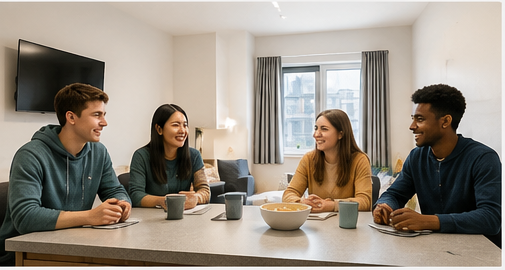
Shared kitchens create natural opportunities for conversation. In an ensuite flat, you may meet someone while making breakfast, compare lectures over dinner or decide to go to an event together. These small, unplanned interactions can make it easier to build friendships, especially during the first few weeks of university.
That does not mean an ensuite guarantees a perfect social life. Flatmates may have different schedules, personalities or standards of cleanliness. Some shared flats become close friendship groups; others are simply people living politely alongside one another. Your experience will depend partly on chance and partly on how willing everyone is to communicate.
Studio living requires more deliberate social effort. You are less likely to bump into someone while cooking, so friendships may come through classes, societies, sports clubs, work or building events. Many modern student residences have communal lounges, gyms and study areas, which allow studio residents to socialise when they choose. This can be ideal for students who like people but do not want social activity inside their home.
Consider how you normally make friends. If you benefit from regular, low-pressure contact, an ensuite flat may help you settle in. If you already have an established network or feel confident joining activities independently, a studio is unlikely to prevent you from having an active social life.
Cost and Budget Considerations
In most locations, studios are more expensive than ensuite rooms. The higher rent reflects the extra facilities, increased floor area and private kitchenette. The price gap can be modest in some buildings and substantial in others, particularly in expensive university cities.
Do not compare headline rent alone. Check whether electricity, water, heating, Wi-Fi and contents insurance are included. Also look at contract length. A room with a slightly lower weekly price may cost more overall if the tenancy runs for additional weeks that you do not need.
Food spending can also change. A private kitchenette may encourage you to cook regularly, but a very compact studio kitchen can limit what you prepare. In a shared flat, students sometimes split basic ingredients or cook together, although you should never rely on this when planning a budget.
The best-value option is not always the cheapest option. If a studio's quiet environment helps you sleep and study well, the premium may be worthwhile. Equally, paying more for privacy makes little sense if you expect to spend most of your time on campus and enjoy communal living. Work out your maximum affordable rent before browsing, then compare what each room gives you for that money.
Cooking, Cleaning and Everyday Routine
Daily habits often matter more than students expect. In a studio, the kitchen belongs entirely to you. You can cook at any time, organise cupboards your own way and avoid arguments about dirty pans. This is particularly useful if you have allergies, follow a specific diet or prepare meals at unusual hours.
The trade-off is that cooking happens close to where you sleep and study. Strong smells may linger, and clutter can quickly make a small room feel cramped. Good ventilation, regular cleaning and sensible storage are essential. You are also responsible for the whole unit, including the bathroom and kitchenette.
In an ensuite flat, you only clean your bedroom and bathroom privately, while the kitchen is a shared responsibility. This can reduce the amount of space you personally maintain, but it introduces compromise. Fridge space, rubbish, washing-up and cleaning schedules are common sources of tension. Clear communication early in the tenancy usually prevents small issues from becoming bigger ones.
Think honestly about your habits. If you are very tidy and become stressed by other people's mess, a studio may be easier. If you are flexible, sociable and comfortable agreeing shared rules, an ensuite flat can work well.
Noise, Study and Wellbeing
Your accommodation should support your studies, but quietness depends on more than room type. Studios are generally more predictable because no one shares your kitchen, yet you may still hear neighbours, corridors, doors, lifts or traffic. An ensuite flat may be calm if your flatmates have similar routines, or noisy if people socialise late at night.
Ask about wall insulation, quiet hours, security and the location of the room within the building. A studio beside a busy entrance may be noisier than an ensuite on an upper floor. If possible, view the room at a realistic time of day rather than relying entirely on polished photographs.
Wellbeing is also connected to social contact. Some students feel restored by having a completely private home. Others find that too much time alone affects their mood or motivation. An ensuite can provide gentle daily interaction, while a studio lets you decide exactly when to engage. Choose the environment that is most likely to keep you balanced, not the one that simply looks most impressive online.

Which Option Suits Different Types of Students?
First-Year Students
For many first-year students, an ensuite room is the easier introduction to university life. A shared kitchen gives you repeated chances to meet people without having to organise every interaction. At the same time, a private bathroom and bedroom provide somewhere to decompress.
A studio can still suit a confident first-year student who values independence or already knows people in the city. The key question is whether you will actively create a social routine outside your room.
International Students
International students may appreciate the social support of an ensuite flat, particularly when adjusting to a new country, language and university system. Flatmates can become an informal source of local knowledge and companionship.
A studio may be better for someone who wants control over food preparation, privacy for calls across time zones or a quiet space during a demanding transition. Neither option is inherently better; the choice depends on whether familiarity and independence or built-in social contact feels more valuable.
Postgraduate and Mature Students
Postgraduate and mature students often have heavier workloads, professional commitments or established routines. A studio can provide the focus and predictability they want. However, an ensuite room in a quieter flat may offer similar privacy at a lower price, so it is worth asking whether postgraduate-only clusters are available.
Budget-Conscious Students
Students watching their spending will usually find more ensuite options within budget. You still receive a private bathroom, while sharing the more expensive kitchen and living facilities. Before rejecting studios completely, compare promotions, tenancy lengths and bill inclusions, but avoid stretching your finances for features you do not genuinely need.
Questions to Ask Before Booking
A room description rarely tells the whole story. Before signing a tenancy agreement, ask practical questions that reveal how the accommodation works day to day:
· How many people share the kitchen and communal areas?
· Are all utility bills included, and is there a usage cap?
· What is the full contract length and total rent payable?
· Is the room suitable for dual occupancy, if relevant?
· How large is the fridge, freezer and food-storage allocation?
· Are communal areas cleaned by staff or only by residents?
· What laundry facilities are available, and how much do they cost?
· Is there secure cycle storage, parcel handling and 24-hour support?
· What are the cancellation, guarantor and room-change policies?
· Can you take a virtual or in-person tour of the exact room type?
Read the agreement carefully and confirm what happens if your course dates change. International students should also check accepted payment methods and guarantor requirements. A lower advertised price can become less attractive once laundry, transport or excluded bills are added.
A Simple Decision Checklist
Choose an ensuite room if you want a private bathroom, a more affordable rent and regular opportunities to meet flatmates. It is particularly suitable if you are new to university, enjoy shared meals or prefer some background social contact in your daily life.
Choose a studio if you want maximum privacy, your own kitchen and complete control over your routine. It may suit you if you study from home frequently, have specific dietary needs, dislike shared cleaning arrangements or feel happiest in a quiet, self-contained space.
When you are still unsure, rank your priorities in order: budget, privacy, social life, cooking, location and room size. The option that wins on your top three priorities is usually the more sensible choice. Do not choose a studio only because it appears more luxurious, and do not choose an ensuite only because friends say it is more social. Your room needs to work for your actual habits.
Final Verdict: Is an Ensuite or Studio Better?
An ensuite room offers the strongest balance of affordability, personal privacy and built-in social contact. For many undergraduates and first-year students, it provides enough independence without making university life feel disconnected. You can retreat to your own room and bathroom while still sharing the everyday moments that often turn flatmates into friends.
A studio offers a different kind of value: calm, control and independence. It is often worth the extra cost for students who need a reliable study environment, prefer cooking alone or simply feel more comfortable in a space that is entirely their own.
Ultimately, the best student accommodation is not the room with the longest feature list. It is the room that supports your budget, routine and wellbeing across the whole academic year. Compare the total cost, view the layout carefully and imagine an ordinary Tuesday rather than move-in day. Where would you rather wake up, make dinner, revise and relax? Your honest answer will usually tell you whether an ensuite or a studio is the better choice.


