


1. What Exactly is a Holding Deposit?
Picture this: You’ve finally found a flat in Manchester or a cosy cottage in Bristol that ticks every single box. You want to lock it down immediately so no one else snaps it up. That’s where a holding deposit comes into play. In the UK rental market, a holding deposit is a small sum of money paid by a prospective tenant to a landlord or letting agent to temporarily secure a property while reference checks, credit history reviews, and tenancy agreement paperwork are finalized.
Think of it as a mutual good-faith gesture. For the tenant, it hits the pause button on viewings, ensuring the landlord takes the property off the market. For the landlord, it demonstrates genuine commitment, filtering out casual browsers who aren't quite ready to commit.
2. The Legal Framework: The Tenant Fees Act 2019
Before June 1, 2019, the UK rental market was a bit of a Wild West when it came to upfront fees. Unscrupulous landlords or agents could demand hefty holding deposits, drag out referencing, and then keep the cash when deals fell through for arbitrary reasons.
Everything changed with the introduction of the Tenant Fees Act 2019 in England. This legislation fundamentally transformed how holding deposits work by establishing strict caps, rigid timelines, and crystal-clear rules on when money must be refunded or can be lawfully retained. For landlords, compliance isn't just best practice—it's a legal necessity that carries hefty fines if breached.
3. How Much Can a Landlord Charge?
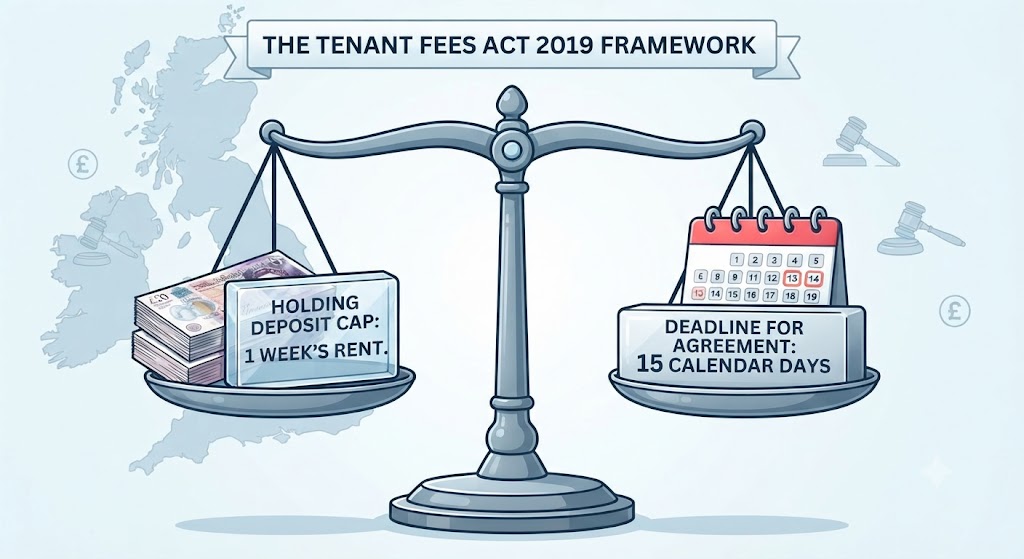
Under the Tenant Fees Act 2019, holding deposits are legally capped. Landlords and letting agents cannot arbitrarily decide how much to charge. The maximum amount you can request is:
- 1 week's rent for properties where the annual rent is under £50,000.
- To calculate 1 week's rent accurately: Multiply the monthly rent by 12, then divide by 52.
4. The Deadline for Agreement (The 'Deadline for Agreement')
Time is of the essence when holding a property. The law introduces a specific timeframe known as the 'Deadline for Agreement' (often referred to as the 15-day deadline). Once a landlord receives a holding deposit, both parties have 15 calendar days to reach a tenancy agreement (referred to as the 'Vrac deadline').
However, this 15-day period can be extended in writing if both the landlord and tenant mutually agree to give referencing or paperwork more breathing room. If the deadline passes without an agreement and no extension has been formally agreed upon, the holding deposit must be refunded to the tenant within 7 days.
5. When Must a Holding Deposit Be Refunded?
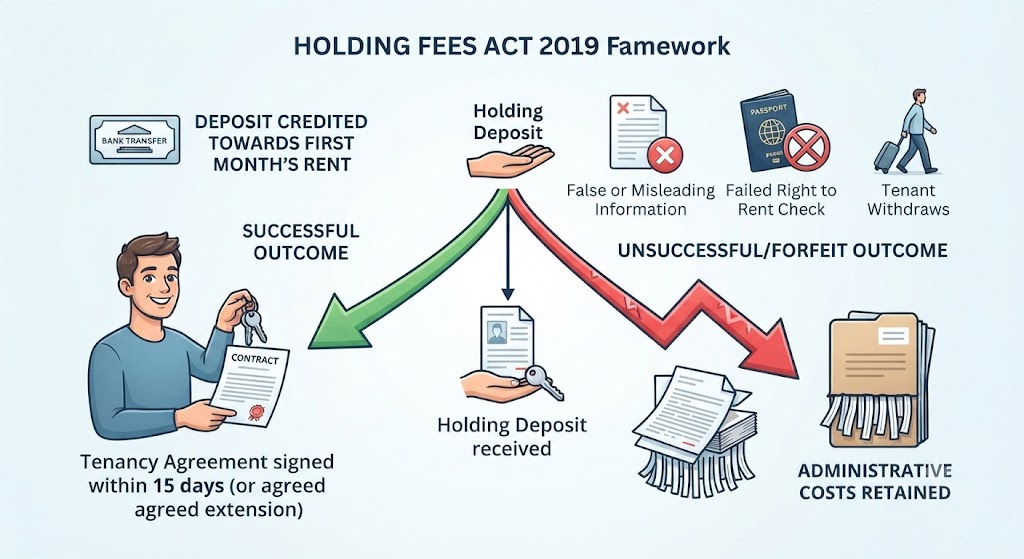
Transparency is vital. In the vast majority of cases, the holding deposit does not vanish into the landlord's pocket. It is either refunded directly to the tenant or credited toward their move-in costs (such as the first month's rent or the security deposit). A full refund must be issued within 7 days of the deadline if:
- The landlord or agent decides to withdraw from the rental agreement before it is signed.
- The 15-day deadline for agreement expires without a tenancy being finalized (and no extension was agreed).
- The landlord imposes unfair, unlawful, or unreasonable conditions that the tenant refuses to accept.
- The tenant decides not to proceed because the landlord breached a term of the agreement or acted unlawfully.
6. When Can a Landlord Keep the Holding Deposit?
There are specific, legally defined scenarios where a landlord is permitted to retain all or part of a holding deposit. Landlords cannot simply keep the money on a whim; they must be able to justify their decision in writing within 7 days. Retention is legally justified if:
- The tenant provides false or misleading information during referencing (e.g., concealing a severe adverse credit history or lying about employment status that directly impacts affordability).
- The tenant fails the Right to Rent check under UK immigration law.
- The tenant withdraws from the property and decides not to proceed with the tenancy.
- The tenant fails to take all reasonable steps to enter into a tenancy agreement within the agreed timeframe, dragging their feet or ignoring communication.
If a landlord chooses to retain a holding deposit, they must provide the tenant with a written explanation detailing the exact reasons within 7 days of the decision. Failure to provide this explanation makes the retention unlawful.
7. Best Practices for Landlords and Agents
Navigating holding deposits smoothly requires professionalism and clear communication. Here are essential best practices for UK landlords:
- Use a Clear Holding Deposit Agreement: Always put terms in writing before accepting any funds. Outline the property address, deposit amount, exact conditions of retention, and the 15-day deadline.
- Protect Client Money: Ensure that holding deposits are held safely in a designated client account if you are an agent, or kept securely by the landlord.
- Streamline Referencing: Partner with efficient referencing agencies to ensure checks are completed well within the 15-day window.
- Communicate Promptly: Keep the prospective tenant updated at every stage. If referencing is delayed due to third parties, secure a written extension immediately.
Ultimately, a holding deposit should be a stress-free bridge between finding a home and signing the lease. By adhering strictly to the Tenant Fees Act 2019, maintaining clear lines of communication, and acting in good faith, both landlords and tenants can ensure a transparent, friction-free rental journey across the UK.


