


Navigating the property market can be daunting, but with the right knowledge, you can secure your dream home safely. This comprehensive guide will walk you through everything you need to know to spot red flags and protect yourself from rental fraud in the UK.
1. The Current Landscape of the UK Rental Market
Finding a place to rent in the UK—whether it is a trendy flat in London, a cosy terrace in Manchester, or a student house in Edinburgh—can often feel like a highly competitive sport. With demand frequently outstripping supply, prospective tenants often find themselves rushing to view properties, making quick decisions, and putting down deposits just to secure a roof over their heads. Unfortunately, this high-pressure, fast-paced environment is exactly what scammers rely on. When desperation meets opportunity, fraudsters step in, offering phantom properties and 'too-good-to-be-true' deals to exploit anxious house hunters.
Rental fraud is not a new phenomenon, but the tactics have evolved with the digital age. Long gone are the days when scammers relied purely on classified ads in the back of local newspapers. Today, they operate on popular property portals, social media platforms, and community noticeboards, creating highly sophisticated and convincing listings. The financial and emotional toll of falling victim to a rental scam can be devastating, often leaving victims out of pocket by thousands of pounds and still without a place to live. However, the good news is that rental scams almost always follow a specific pattern. By learning the psychology behind these scams and familiarising yourself with the classic warning signs, you can navigate the market with confidence and keep your hard-earned money safe.
2. The Anatomy of a Rental Scam
At its core, a rental scam is a confidence trick designed to part you from your money—usually in the form of a holding deposit, a security deposit, or a first month's rent—before you realise that the property either doesn't exist, isn't for rent, or doesn't belong to the person claiming to be the landlord.
There are two primary ways scammers operate in the UK market:
· Hijacked Listings: In this scenario, a fraudster finds a legitimate listing on a well-known site like Rightmove or Zoopla. They copy the photos, the description, and the property details, but they change the contact information and lower the rent slightly to make it an irresistible bargain. They then post this cloned listing on free platforms like Gumtree, Facebook Marketplace, or even replicate it on OpenRent. When you contact them, you are actually speaking to the scammer, not the real landlord or letting agent.
· Phantom Properties: Here, the scammer completely fabricates a listing. They might use photos of a beautiful apartment stolen from an Airbnb listing or a property site from another country. The address provided might be real, but the property described does not match the actual building. These scams rely heavily on excuses as to why you cannot view the property in person, pushing you to secure it purely based on the enticing photographs.
3. Crucial Red Flags: How to Spot a Rental Scam
Scammers prey on urgency and excitement. While they are often quite clever, their schemes usually contain several noticeable flaws if you know what to look for. Drawing on established industry advice, here are the major red flags you must watch out for:
The "Too Good to Be True" Price Tag
This is the most common bait. If a beautifully furnished two-bedroom flat in Zone 1 London is listed for £800 a month, your alarm bells should immediately ring. Scammers deliberately price properties below the market average to generate a massive amount of interest very quickly. They want a large pool of eager applicants so they can pressure one of them into paying a deposit immediately. Always research the average rental prices in the specific postcode you are looking at. If a deal seems astonishingly cheap, it is almost certainly a scam. Legitimate landlords want a fair market return on their investment; they do not hand out luxury flats for a fraction of their worth out of the goodness of their hearts.
The "Absentee Landlord" Excuse
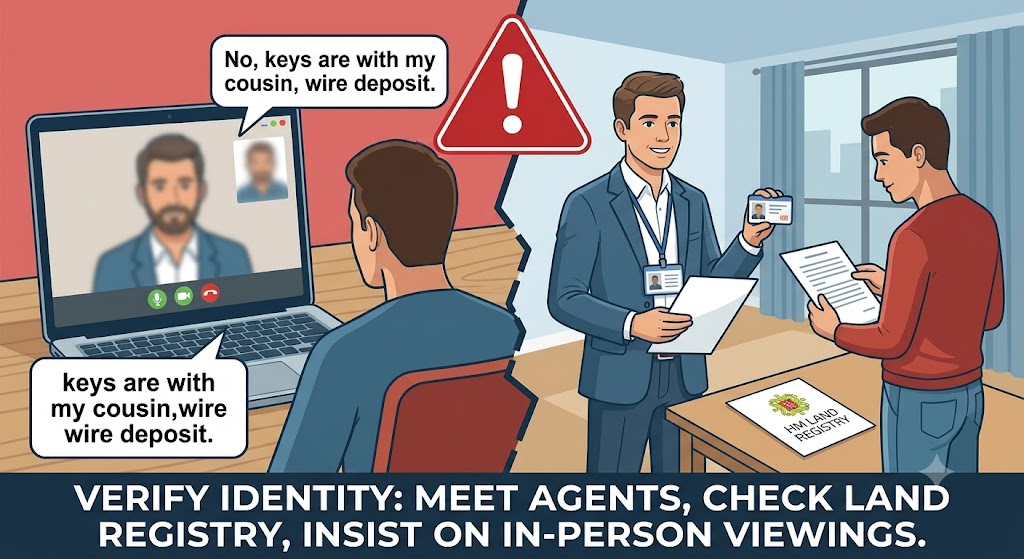
If the person listing the property claims they are unable to meet you, be highly suspicious. The classic script involves the landlord claiming they are out of the country—perhaps doing missionary work, serving in the military overseas, or dealing with a sudden family emergency abroad. Because they are away, they cannot show you the property in person, but they promise to 'mail you the keys' as soon as you wire the deposit.
Never, under any circumstances, transfer money to someone you have not met or verified, for a property you have not seen. A genuine absentee landlord will always employ a local letting agent or a property management company to conduct viewings and handle the paperwork.
Requests for Untraceable Payment Methods
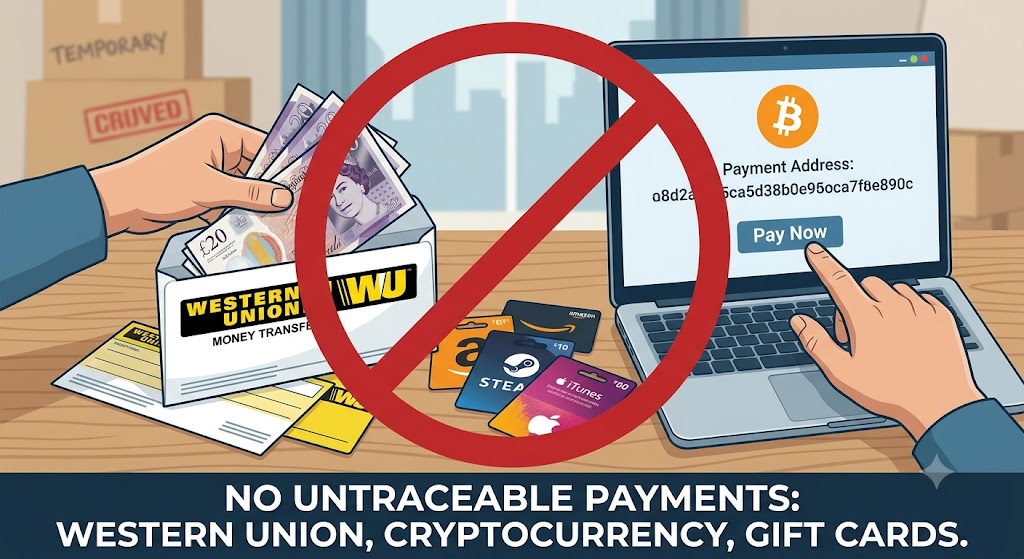
A massive red flag is how the 'landlord' asks to be paid. Fraudsters will actively avoid the standard UK banking system because it leaves a paper trail. If a listing contact asks you to pay a deposit via a wire transfer service (like Western Union or MoneyGram), cryptocurrency, or by purchasing gift cards, halt all communication immediately. These payment methods are effectively the same as handing over cash; once the money is gone, it is nearly impossible to trace or recover. Legitimate landlords and registered letting agents will request payments via standard bank transfer (BACS/CHAPS), credit card, or debit card to a verified UK business or personal account.
High-Pressure Tactics and FOMO
Scammers know that if you have time to think, you might realise you are being conned. Therefore, they manufacture a false sense of urgency. They might tell you that there are ten other people ready to transfer the deposit right now, and if you don't send the money within the hour, you will lose the property. This Fear Of Missing Out (FOMO) is designed to make you bypass your logical thinking and act on impulse. A professional landlord or letting agent will never bully or pressure you into handing over money without giving you time to read a contract.
Skipping the Legalities
In the UK, renting a property involves a significant amount of legal compliance. Landlords are legally required to conduct 'Right to Rent' checks (verifying your immigration status), and they typically want to see references, bank statements, and conduct a credit check to ensure you can afford the rent. If a landlord is willing to hand over the keys without asking for any of this documentation, or if they claim a tenancy agreement is 'unnecessary', they are likely running a scam. A tenancy agreement protects both the tenant and the landlord; anyone avoiding it is avoiding the law
4. Actionable Steps: How to Rent Safely in the UK
Knowing the red flags is your first line of defence, but taking proactive, defensive steps when hunting for a rental will ensure you never fall victim. Here is a step-by-step guide on how to approach the UK rental market safely:
See It to Believe It
You must view the property in person before signing a contract or handing over a penny. Photos can be doctored, and videos can be stolen. Walking through the front door is the only way to confirm the property exists, matches the description, and is currently available.
If you are moving to the UK from abroad or relocating across the country and genuinely cannot view it yourself, do not rely on a virtual tour provided by the landlord. Ask a trusted friend, family member, or a relocation agent to view the property on your behalf. Be aware of the 'lockbox scam'. Sometimes scammers gain physical access to vacant properties (perhaps an Airbnb or a home that has been empty for a while) and install a lockbox. They will give you the code to let yourself in for a 'self-guided tour' to make the scam seem legitimate. Always insist on meeting the landlord or the letting agent at the property.
Verify the Identity of the Landlord or Agent
Do not take people at their word; verify their credentials. If you are dealing with a letting agent, check that they are a member of a recognised professional body, such as ARLA Propertymark, the National Approved Letting Scheme (NALS), or the UK Association of Letting Agents (UKALA). By law, UK letting and managing agents must also belong to a government-approved redress scheme (either The Property Ombudsman or the Property Redress Scheme).
If you are dealing directly with a private landlord, you can verify their ownership of the property for a small fee (usually £3) by checking the HM Land Registry online. The name on the title deed should match the name of the person asking you for money.
Protect Your Personal Information
Rental scams aren't just about stealing money; they can also be about identity theft. Be incredibly wary of any listing contact who demands a copy of your passport, National Insurance number, or bank details before you have even viewed the property. While you will need to provide this information eventually for referencing and Right to Rent checks, you should only do so once you have viewed the property, confirmed the landlord's identity, and decided to proceed with an application.
Understand UK Tenancy Laws and Deposit Rules
Familiarising yourself with the law is your biggest shield. Under the Tenant Fees Act 2019, landlords and letting agents in England cannot charge you arbitrary administrative fees. They can only legally ask for:
- A holding deposit: This is capped at exactly one week’s rent and is used to reserve the property while referencing takes place.
- A tenancy deposit (security deposit): This is capped at five weeks’ rent (for properties where the annual rent is less than £50,000).
Furthermore, it is a legal requirement in the UK that your security deposit must be placed into a government-approved Tenancy Deposit Protection (TDP) scheme (such as the Deposit Protection Service, MyDeposits, or the Tenancy Deposit Scheme) within 30 days of you paying it. Scammers will ignore these laws, often asking for two or three months' rent upfront under the guise of a 'security deposit' that they have no intention of protecting.
5. What to Do If You Suspect or Fall Victim to a Scam
If you are currently communicating with someone you suspect is a scammer, cut off all contact immediately. Trust your instincts—if something feels off, rushed, or overly complicated, walk away. There will always be other properties.
If you realise you have already sent money or personal information to a fraudster, time is of the essence:
1. Contact Your Bank Immediately: Call your bank's fraud department. If you paid by bank transfer or card, they might be able to freeze the transaction, stop the payment, or initiate a chargeback process to recover your funds.
2. Report it to Action Fraud: Action Fraud is the UK’s national reporting centre for fraud and cybercrime. You can report the crime via their website or by calling their helpline. Providing them with all the details, emails, and phone numbers can help them track down the perpetrators and stop them from scamming others.
3. Flag the Listing: If you found the scam property on a portal like Zoopla, Rightmove, Gumtree, or Facebook, use the 'Report this listing' button immediately. This alerts the platform's moderation team so they can remove the advert and protect other potential renters.
6. Conclusion
Searching for a rental property should be an exciting step towards a new chapter in your life, not a source of stress and financial loss. While scammers are continually refining their techniques, their basic reliance on urgency, anonymity, and untraceable money remains unchanged. By keeping a cool head, verifying everything, insisting on physical viewings, and understanding your rights under UK tenancy law, you can easily outsmart the fraudsters. Remember the golden rule of the rental market: if an opportunity seems too good to be true, it almost certainly is. Take your time, do your due diligence, and trust your gut.


