


Introduction: The Great British House Hunt
If you have ever embarked on the great British house hunt, you will know that the UK rental market is a beast of its own making. It is a landscape filled with quirks, charm, and a vocabulary that can leave newcomers scratching their heads. From the bustling, neon-lit streets of Central London to the tranquil, sheep-dotted hills of the Yorkshire Dales, the places we call home are as diverse as the people who live in them.
Whether you are a student moving to Manchester, a young professional seeking your fortune in Birmingham, or a family looking for a slice of the quiet life in the Cotswolds, understanding the different types of rental properties is crucial. In this comprehensive guide, we are going to explore the varied tapestry of UK rentals. We will unpack the pros, the cons, and the little idiosyncratic details—like why some older properties still insist on separate hot and cold taps—so you can find the perfect place to put the kettle on.
1. Flats and Apartments: The Urban Staples
When you hear the word 'flat' in the UK, you are tapping into the lifeblood of British urban living. But 'flat' is a massive umbrella term covering a multitude of sins and salvations. Let us break it down.
Purpose-Built Flats:
As the name suggests, these are buildings designed from the ground up to be apartments. You will find them everywhere from 1960s brutalist tower blocks to gleaming, glass-fronted modern developments in places like Canary Wharf or MediaCityUK. The modern ones often come with excellent energy efficiency (a high EPC rating is a blessing in winter!), double glazing, and open-plan layouts. They are functional, relatively easy to heat, and often have reliable water pressure. However, some mid-century blocks might lack the aesthetic charm of older buildings and can suffer from a lack of communal upkeep if the management company isn't on the ball.
Period Conversions:
Ah, the period conversion. These are large, historic houses—usually Victorian, Edwardian, or Georgian—that have been sliced up into individual flats. They are incredibly popular in London boroughs like Islington and Fulham, as well as cities like Bristol and Bath. The draw here is character: think high ceilings, large sash windows, ornate fireplaces, and original floorboards. But character comes at a cost. Period conversions are notorious for being drafty, difficult to heat, and plagued by thin walls. If your upstairs neighbor is an enthusiastic tap dancer, you are going to know about it. Yet, for many, the charm vastly outweighs the squeaky floorboards.
Studio Flats:
The quintessential choice for the solo dweller. A studio flat combines the bedroom, living room, and kitchen into a single open space, with a separate bathroom. They are the most affordable way to live entirely alone in expensive cities. While they teach you the fine art of minimalism (you simply cannot hoard in a studio), they can feel claustrophobic if you work from home. Cooking a strong curry in a studio also means your bedsheets might smell of cumin for a week—a small price to pay for independence!
Maisonettes:
A surprisingly wonderful hybrid. A maisonette is a flat that usually has its own private front door directly to the outside, rather than sharing a communal corridor. They often span two floors, feeling much more like a small house than a traditional flat. You will often find them above shops or as part of low-rise suburban estates. They are a brilliant middle ground for those who want a bit more privacy but cannot stretch to the budget of a full house.
2. Terraced Houses: The Backbone of Britain
You simply cannot picture a British street without picturing a terrace. Famously depicted in soaps like Coronation Street, terraced houses are rows of identical (or very similar) houses sharing side walls. Built largely during the Industrial Revolution to house workers, they are heavily concentrated in Northern powerhouses like Leeds, Sheffield, and Manchester, as well as in London's endless suburban sprawl.
Mid-Terrace:
These houses are squished between two others. The major advantage? Insulation. Having neighbors on both sides means you share their heat, keeping your winter energy bills noticeably lower. They often have a cozy, community feel and usually come with a small back yard or garden. The downside is that you only have windows at the front and the back, which can make the central rooms (often the stairs or dining room) a bit dark. Also, noise can be an issue if the brickwork is thin.
End-of-Terrace:
The crown jewel of the terraced world. You only share one wall, meaning less neighborly noise, and you often get a slightly larger garden and sometimes side access (a game-changer if you own a bicycle). Unsurprisingly, they usually command a slightly higher rent than their mid-terrace counterparts.
3. Semi-Detached and Detached Houses: The Suburban Dream
As you move out of the city centers and into the leafier suburbs and commuter belts—think places like Surrey, Cheshire, or the outskirts of Edinburgh—the properties begin to spread out.
Semi-Detached:
Affectionately known as a 'semi', these houses are attached to one other property, forming a pair. Built extensively during the 1920s and 1930s housing boom, they are the classic British family home. They usually boast off-street parking (a driveway), front and rear gardens, and generous proportions. Renting a semi is perfect for families or couples planning to stay put for a while. You get the space for a dog, a barbecue, and maybe a trampoline, while still keeping rent somewhat manageable compared to a fully detached home.
Detached Houses:
The pinnacle of privacy. A detached house stands entirely on its own plot of land, sharing no walls with anyone. If you want to play the drums at 2 AM or hate the idea of hearing a neighbor sneeze, this is the property for you. In the rental market, detached houses are usually the most expensive option. They require more upkeep—especially the gardens—and cost more to heat because all four external walls are exposed to the great British weather. They are predominantly found in rural areas, affluent suburbs, and newer housing estates.
4. HMOs (Houses in Multiple Occupation): The Social Hub
HMOs are a massive part of the UK rental ecosystem, particularly in university towns (like Nottingham, Oxford, and Cardiff) and major economic hubs where young professionals flock.
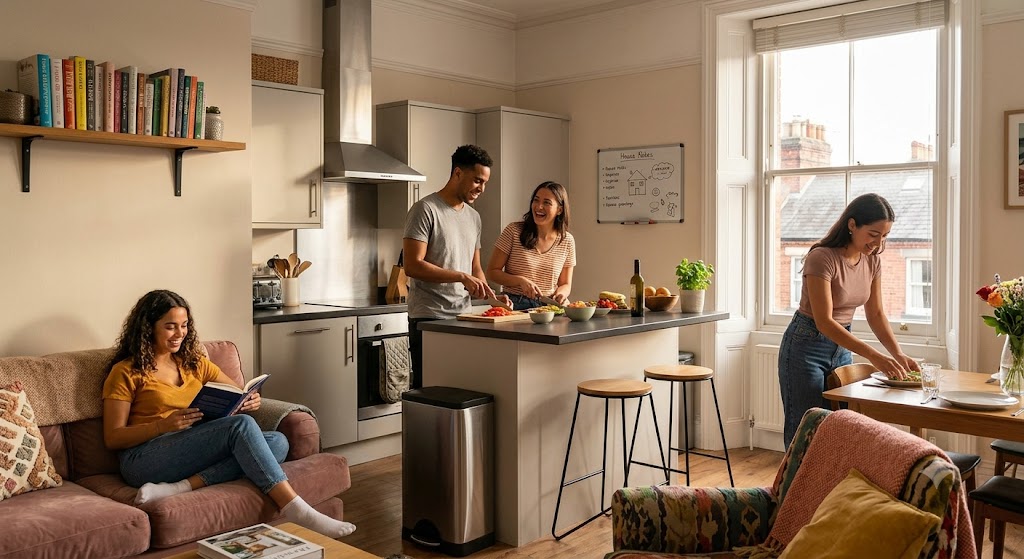
An HMO is essentially a house share. It is a property rented out by at least three people who are not from one 'household' (e.g., a family) but share facilities like the bathroom and kitchen. For many renters in their twenties, living in an HMO is a rite of passage.
The Pros:
Financially, it makes perfect sense. Renting a single room in a shared house is drastically cheaper than renting a one-bedroom flat. Bills (council tax, water, energy, internet) are split multiple ways, and in many cases, landlords include them in the monthly rent for ease. Socially, it can be fantastic; many lifelong friendships are forged over shared Sunday roasts and Netflix binges in the communal lounge.
The Cons:
Sharing a fridge with four other people requires diplomacy. Cleanliness standards vary wildly from person to person, which can lead to the classic passive-aggressive sticky note on the microwave. Furthermore, HMOs are heavily regulated by local councils to ensure safety (fire doors, proper smoke alarms), but lower-end HMOs can sometimes feel a bit cramped or rough around the edges.
5. Build-to-Rent (BTR): The New Era of Renting
This is the fastest-growing sector in the UK housing market and it is changing the way people think about renting. Traditionally, you rent from a private, individual landlord. In the Build-to-Rent model, entire apartment blocks are built by corporate developers explicitly for renting out, rather than selling.
Cities like Manchester, London, and Birmingham are seeing skylines transformed by BTR developments. These aren't just flats; they are highly managed lifestyle communities.
The Perks:
The amenities are staggering. Many BTR buildings come with on-site gyms, 24/7 concierges, co-working spaces, cinema rooms, and communal roof terraces. They are almost universally pet-friendly (a massive struggle in the traditional rental market) and offer long-term, secure tenancies with no risk of a landlord suddenly deciding to sell the flat. Maintenance is handled swiftly via dedicated apps.
The Catch:
You pay a premium for the lifestyle. Rents in BTR developments are noticeably higher than traditional flats in the exact same area. However, advocates argue that when you factor in the saved gym membership and the inclusion of super-fast Wi-Fi, the cost balances out. It appeals hugely to busy professionals who want a frictionless living experience.
6. Cottages and Rural Retreats: Countryside Charm
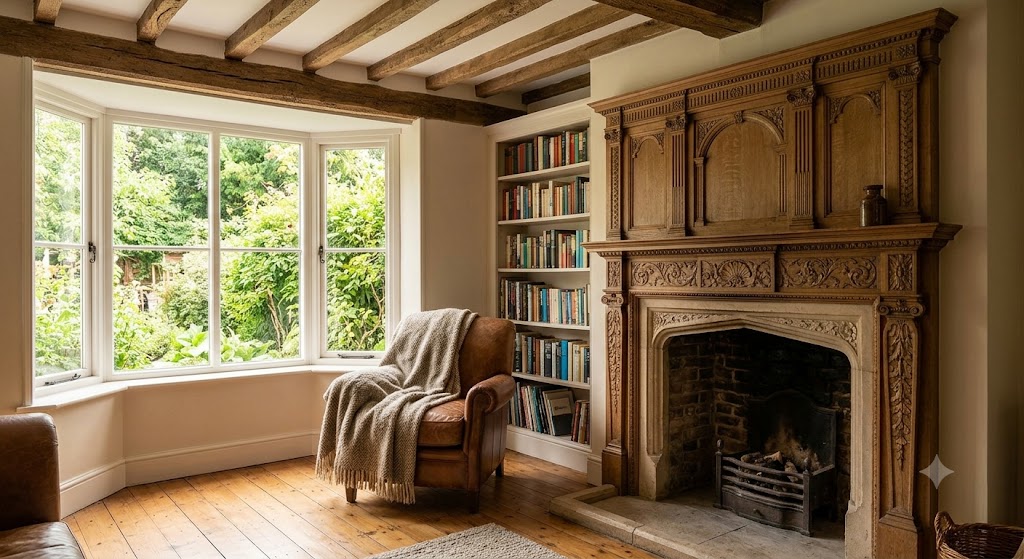
If your soul yearns for roaring log fires, exposed wooden beams, and a pub at the end of the lane, a rural cottage might be calling your name. Found abundantly in regions like the Cotswolds, Cornwall, the Scottish Highlands, and rural Wales, these properties are the stuff of postcards.
Renting a cottage offers unparalleled peace, cleaner air, and access to nature. However, it requires a certain hardiness. Many historical cottages are Grade-listed, meaning the landlord cannot easily install double glazing or modern insulation. You might rely on heating oil or a wood burner instead of mains gas. Furthermore, living rurally in the UK often means you are completely reliant on a car, and your broadband speeds might occasionally feel like they are powered by a hamster on a wheel. But for those who want to escape the rat race, there is nothing quite like it.
Conclusion: Finding Your Corner of the UK
The UK rental market, despite its high costs and fierce competition, offers an incredibly rich variety of living experiences. Your choice ultimately boils down to a compromise between your budget, your lifestyle, and your tolerance for quirks.
If you are a social butterfly looking to save money, an HMO in a vibrant city is the way to go. If you prioritize convenience, modern amenities, and can stretch the budget, a Build-to-Rent apartment will feel like a hotel. Families will naturally gravitate toward the sturdy, reliable semi-detached homes of the suburbs, while romantics might brave the chilly charm of a period conversion or a countryside cottage.
When viewing properties, always ask the practical questions: What is the EPC rating? Who manages the property? What is the water pressure like? And above all, trust your gut. A rental property is more than just a roof over your head; it is your sanctuary, your home office, and your retreat. With patience and a clear idea of what you are looking for, you will find the right place to call home in the UK.


