


1. Introduction to UK Residential Tenancies
Navigating the United Kingdom's real estate market requires a thorough understanding of the legal agreements that govern occupancy. A tenancy agreement is a legally binding contract between a landlord and a tenant, outlining the terms, rights, and obligations of both parties. The UK private rented sector (PRS) relies heavily on standard contracts to ensure property compliance, secure rental yield, and protect tenant security.
Whether you are an institutional investor, a private buy-to-let landlord, or a residential tenant, selecting the correct tenancy structure is critical. The choice of agreement determines legal protections under statutory frameworks, procedures for repossession, deposit protection duties, and repair obligations.
2. Assured Shorthold Tenancy (AST)
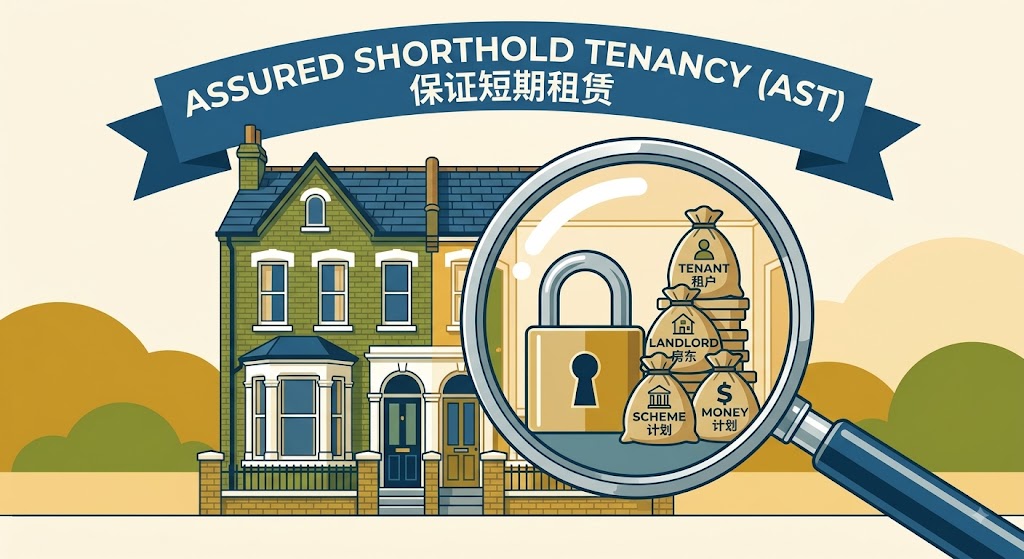
The Assured Shorthold Tenancy (AST) is the most common form of residential agreement in England and Wales, established under the Housing Act 1988 and updated by the Housing Act 1996. An AST automatically applies if the property is let as separate accommodation, serves as the tenant's main home, and the landlord does not live on the premises.
Key Characteristics of an AST:
· Fixed-Term vs Periodic: The contract typically runs for a fixed term of 6 or 12 months, after which it can transition into a periodic tenancy (month-to-month or week-to-week).
· Deposit Protection Scheme: Landlords are required by law to safeguard tenant deposits in a government-approved tenancy deposit scheme (TDS, Deposit Protection Service, or MyDeposits) within 30 days of receipt.
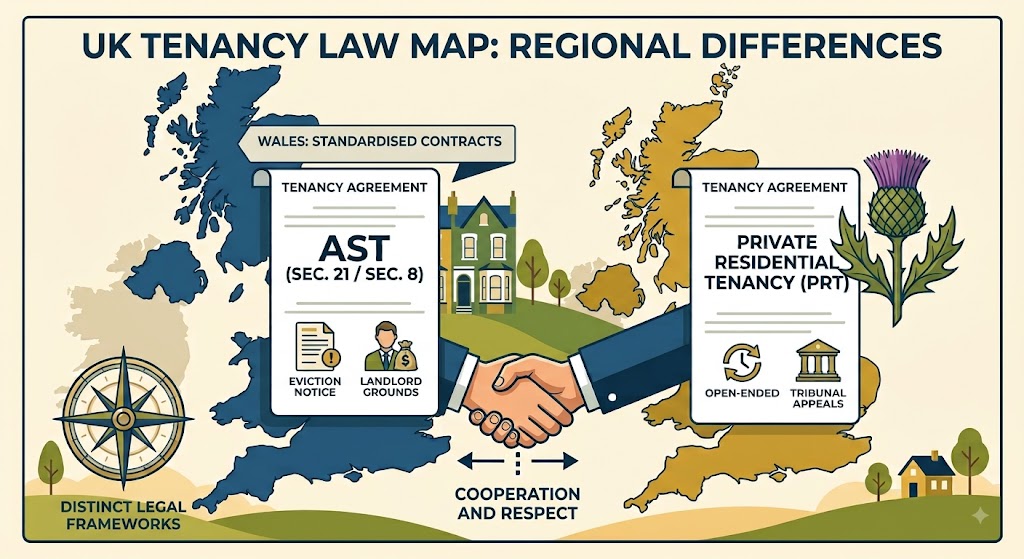
· Eviction Framework: Historically, ASTs allow landlords to repossess property using Section 21 (no-fault eviction) after the fixed term, or Section 8 (fault-based eviction for rent arrears or breach of terms).
· Rent Thresholds: Annual rent must generally be under £100,000 (properties above this threshold require non-housing act agreements).
Note on Legislative Reforms: Under the evolving Renters (Reform) Bill landscape, statutory changes in England aim to phase out Section 21 'no-fault' evictions, shifting standard AST structures toward open-ended periodic tenancies with expanded Section 8 grounds for possession.
3. Non-AST Residential Tenancies
While ASTs dominate the market, several scenarios fall outside the Housing Act 1988 framework. These require specialized contractual arrangements:
Common Law Tenancies / Non-Housing Act Tenancies
A non-Housing Act tenancy applies when the tenancy fails to satisfy standard AST criteria. Typical examples include properties where the annual rent exceeds £100,000 (high-value lets), rent is below £250 per year (£1,000 in London), or where the tenant is a corporate body rather than an individual.
Company Lets
A Company Let Agreement is executed when a limited company rents a residential property to house its employees or executives. Because the tenant is a legal entity rather than an individual, statutory consumer protections like Section 21 or Section 8 do not apply. Instead, lease terms and repossession procedures are governed strictly by Common Law and express contract terms.
Excluded Tenancy / Lodger Agreement
An Excluded Tenancy applies when a resident landlord shares living space (such as a kitchen or bathroom) with a lodger. Lodgers possess significantly fewer statutory rights than tenants. Landlords do not need a court order to evict a lodger upon serving reasonable notice, nor are they legally obligated to protect lodger deposits in statutory schemes, although doing so remains best practice.
4. Houses in Multiple Occupation (HMO) & Shared Accommodation
In the UK real estate market, multi-let properties and shared housing represent high-yield rental strategies. However, they trigger complex statutory requirements under local council authority guidelines.
HMO Tenancy Agreements
A property is classified as a House in Multiple Occupation (HMO) if it is let to at least 3 tenants forming more than 1 household, sharing facilities like bathrooms or kitchens. Large HMOs (5 or more tenants from multiple households) mandatorily require an HMO license from the local council.
Landlords operating HMOs generally utilize two contractual formats:
· Individual Tenancy Agreements: Each occupant signs an individual AST for their designated bedroom with access to communal areas. Rent defaults fall solely on the individual tenant.
· Joint & Several AST: All occupants sign a single AST, creating a joint tenancy. Tenants share 'joint and several liability' for total rent payments and property upkeep.
5. Specialized & Regional Tenancy Types
Different property sectors and geographic jurisdictions across the UK utilize dedicated agreements adapted to local legislation and tenant demographics:
Student Tenancies
Student lets are usually structured as fixed-term ASTs aligned with the academic year (typically 9 to 12 months). Due to limited credit histories, student agreements frequently incorporate Deed of Guarantee requirements, where a guarantor assumes financial liability for unpaid rent or damage.
Regulated Tenancies (Protected Tenancies)
Established before 15 January 1989 under the Rent Act 1977, Regulated Tenancies grant exceptional security of tenure. Tenants hold a lifelong legal right to occupy the property, and rent is capped at a 'Fair Rent' determined by the Valuation Office Agency. These rare tenancies are prized assets within heritage property portfolios.
Devolved Authorities: Scotland & Wales
Housing law is devolved in Scotland and Wales, creating distinct statutory instruments:
· Private Residential Tenancy (PRT) - Scotland: Replaced ASTs in Scotland. All tenancies are open-ended, with no fixed term and no no-fault eviction options.
· Standard Occupation Contract - Wales: Introduced under the Renting Homes (Wales) Act 2016. Occupants are known as 'contract-holders' governed by Standard or Secure Contracts.
6. Overview and Comparison of Key Tenancy Agreements
To summarize the distinct frameworks available across the UK, the following breakdown compares each primary agreement type by target demographic, legal eviction mechanism, and statutory deposit requirements:
· Assured Shorthold Tenancy (AST): Targeted at standard private tenants in individual or family households. Notice and eviction are executed via Section 21 or Section 8 notices under the Housing Act. Statutory deposit protection in an approved scheme (DPS) is legally mandatory.
· Non-AST / Company Let: Designed for corporate lets or high-value residential properties where annual rent exceeds £100,000. Governed by Common Law and express contract terms rather than statutory housing acts. Statutory deposit protection is optional.
· Excluded Tenancy (Lodger Agreement): Applies to lodgers living in the same property as a resident landlord. Repossession requires only reasonable notice without needing a court order. Deposit protection in statutory schemes is not legally required.
· HMO Joint AST: Utilized for shared professional or student lets in multi-occupancy properties. Eviction procedures follow joint Section 21 or Section 8 mechanisms. Statutory deposit protection is strictly required.
· Private Residential Tenancy (PRT - Scotland): The legal standard for Scottish private rentals. Eviction is restricted strictly to statutory grounds specified under the PRT Act (no no-fault evictions). Deposit protection in an approved scheme (e.g., SafeDeposits Scotland) is mandatory.
7. Strategic Summary for Landlords and Investors
Selecting the appropriate legal framework for residential letting directly impacts operational risk, regulatory compliance, and overall portfolio yield. Landlords must ensure meticulous draftsmanship of tenancy contracts, strictly adhering to statutory deposit rules, gas safety certification, energy performance certificate (EPC) standards, and Right to Rent verification.
As the UK property landscape evolves with legislative reforms, staying informed on landlord obligations and legal agreement structures remains essential for sustainable estate management.


