


Introduction
In today's rental market, many tenants mistakenly believe they are in a vulnerable or subordinate position, simply living under someone else's roof. However, a tenancy agreement is fundamentally an equal commercial contract. According to authoritative government documents (such as the GOV.UK guide to private renting) and industry standards (like Propertymark's consumer guides), the law grants tenants a series of clear, robust, and inalienable rights.
Understanding these rights will not only protect your finances in the event of a dispute but also ensure you maintain a safe, comfortable, and private living environment. This guide comprehensively outlines your core rights throughout the renting process, providing real-world scenarios and actionable advice on how to smartly, legally, and effectively defend your interests.
1. The Right to a Safe and Habitable Home
Overview: Landlords have an absolute legal obligation to ensure that the rental property is "Fit for Human Habitation" throughout the entire duration of the tenancy. This encompasses the structural safety of the building, the proper functioning of all water, electricity, and gas installations, the absence of severe dampness and mold, and adherence to basic fire safety standards.
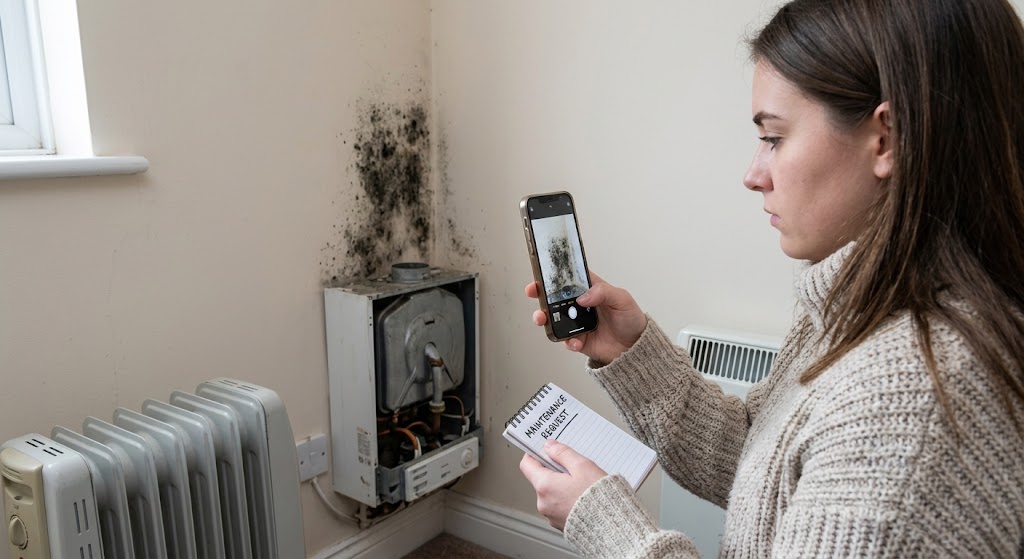
Scenario: Winter arrives, and you discover that the boiler has broken down completely. The property has no heating, and there is no hot water for showers. Simultaneously, due to exterior wall seepage, large patches of black mold begin to grow in the corners of your bedroom. When you report this, the landlord delays or refuses repairs, claiming "contractors are too expensive right now, let's wait until spring" or blaming you by saying "the mold is because you don't open the windows when you shower."
Actionable Advice:
· Keep Written Records: Do not rely on phone calls. Immediately take high-resolution photos or videos of the mold and the broken facilities. Formally notify the landlord or letting agent in writing (via email or text message, ensuring a timestamp) and request repairs within a reasonable timeframe (for emergencies like lack of heating/water, 24-48 hours is standard).
· Do NOT Withhold Rent: Many tenants angrily stop paying rent when repairs are ignored. This is a highly dangerous and legally incorrect approach. Withholding rent puts you in breach of the tenancy agreement and gives the landlord legal grounds to evict you.
· Report to the Local Council: If the landlord consistently ignores written requests, contact the Environmental Health Department of your local council. They have the authority to conduct a Housing Health and Safety Rating System (HHSRS) assessment. If hazards are identified, the council can issue a legally binding "Improvement Notice" compelling the landlord to fix the issues.
2. The Right to Quiet Enjoyment
Overview: The "Right to Quiet Enjoyment" is a cornerstone of tenancy law. It means that once you legally rent the property, it is your private home for the duration of the lease. The landlord or letting agent cannot use their ownership status to enter the property arbitrarily or disturb your daily life without reasonable grounds and prior notice.
Scenario: You are resting at home on a weekend, and the landlord suddenly lets themselves in using a spare key, smiling and saying they just wanted to "check on the property's condition." Alternatively, during the last two months of your tenancy, the letting agent frequently brings prospective tenants for viewings on weekdays while you are at work, without obtaining your explicit permission.
Actionable Advice:
· Enforce the 24-Hour Notice Rule: The law strictly dictates that, except in extreme emergencies (e.g., fire, severe flooding, gas leaks), the landlord or agent MUST provide at least 24 hours' written notice before entering. The notice must also state a valid reason for the visit (such as a routine inspection or repair).
· You Can Refuse Inconvenient Times: Even with 24 hours' notice, if the proposed time is highly inconvenient (e.g., you work night shifts and sleep during the day, or someone is ill at home), you have the absolute right to refuse entry and negotiate a mutually convenient alternative time.
· Address Harassment Immediately: If the landlord repeatedly ignores these rules and enters without permission, it constitutes "harassment" under the law. Send a formal letter explicitly stating that they are breaching your Right to Quiet Enjoyment. In extreme cases of sustained harassment, you may legally change the lock cylinders to protect your privacy, provided no damage is done to the door and the original locks are reinstalled at the end of the tenancy.
3. The Right to Tenancy Deposit Protection
Overview: Unfair deposit deductions are one of the most common disputes at the end of a tenancy. To prevent landlords from arbitrarily withholding money, the law mandates that landlords must place your security deposit into a government-approved Tenancy Deposit Scheme (TDS) within a specific timeframe (usually 30 days of receipt).
Scenario: At the end of a one-year lease, you clean the property thoroughly and prepare to move out. Upon inspection, the landlord claims the living room carpet is "not as bright" as it was when you moved in, and the edge of the sofa shows slight wear. Based on this, they demand a deduction of £600 for "depreciation and replacement." However, these changes clearly fall under normal "fair wear and tear."
Actionable Advice:
· Verify Deposit Protection: Within 30 days of paying your deposit, the landlord must provide you with "Prescribed Information" proving where the money is held. If they fail to protect the deposit or provide this information, you can take them to court. Courts routinely order the landlord to return the deposit in full and may award you compensation of one to three times the deposit amount.
· Gather Strong Evidence: On the day you move in, meticulously check the inventory. Take photos of all pre-existing flaws, stains, and scratches, and email these to the agent before signing. When moving out, take detailed photos of every room and appliance after cleaning.
· Utilize Free ADR Services: Do not engage in endless arguments over unfair deductions. Instead, raise a dispute directly with the deposit scheme holding your money. They offer a free Alternative Dispute Resolution (ADR) service. Crucially, the burden of proof lies with the landlord. If they cannot provide compelling evidence that you caused malicious damage beyond fair wear and tear, the adjudicator will order the deposit returned to you.

4. The Right to Transparent and Fair Fees
Overview: In the past, letting agents often charged a myriad of administrative fees. To curb this, legislation like the UK's Tenant Fees Act banned the vast majority of supplementary charges aimed at tenants, significantly reducing the financial burden of moving.
Scenario: You find a great apartment through an agency. Just as you are about to sign, the agent hands you an invoice that includes rent and deposit, plus a £200 "Referencing Fee," a £150 "Administration & Contract Fee," and a clause stating you must pay a mandatory £150 "Professional Cleaning Fee" when you move out.
Actionable Advice:
· Know the "White List" of Legal Fees: By law, landlords and agents can only charge for specific items: rent, a capped refundable tenancy deposit (usually maximum 5 weeks' rent), a capped refundable holding deposit (maximum 1 week's rent), a fee for varying the tenancy agreement (usually capped at £50), actual costs for early termination requested by the tenant, and default fees for tenant breaches (like lost keys or late rent). The referencing, admin, and mandatory cleaning fees in the scenario are illegal.
· Refuse and Report: Confidently cite the relevant Tenant Fees legislation and refuse to pay illegal charges. If the agent threatens to withdraw the property, report them to the local Trading Standards or their redress scheme (such as The Property Ombudsman or Propertymark). Agents caught charging banned fees face severe financial penalties.
5. Protection from Unfair and Illegal Eviction
Overview: As long as your fixed-term tenancy is valid, or you are in a statutory periodic (rolling) tenancy, the landlord cannot forcibly remove you. Evicting a tenant requires a strict, legally mandated procedure.
Scenario: The landlord suddenly needs capital and decides to sell the property. They send you a WhatsApp message: "I've listed the house for sale. I need it back by Monday, so please move out this weekend." When you protest that it's impossible to find a new place so quickly, the landlord threatens: "It's my house! If you don't leave, I'll cut off the water and electricity, or hire someone to change the locks and throw your stuff out."
Actionable Advice:
· Identify Invalid Notices: A text message, email, or verbal demand to leave is legally void. A landlord must serve a formal written notice using the correct legal forms (e.g., a Section 21 "no-fault" notice or a Section 8 "fault" notice). For a standard no-fault eviction, the law typically requires a minimum notice period (often two months).
· Call the Police for Threats: If the landlord attempts to force entry, changes locks, cuts off utilities, or physically removes your belongings, they are committing a criminal offense (Illegal Eviction). You should call the police immediately and contact your local council's Tenancy Relations Officer for urgent intervention.
· You Can Stay Until a Court Order is Issued: Even after a valid two-month notice period expires, the landlord still cannot physically remove you themselves. If you do not leave, they must apply to a court for a formal Possession Order. Only court-appointed bailiffs can carry out a physical eviction. You retain the legal right to occupy the property until that point.
6. The Right to Information and Transparency
Overview: Transparency is essential for safety. The law ensures you have the right to receive crucial documents at the start of your tenancy to verify the property's safety and know exactly who you are renting from.
Scenario: You are about to sign the lease, but the agent only provides a basic contract. They refuse to disclose the actual landlord's name and contact details and fail to provide any safety certificates (gas or electric), brushing it off by saying, "Don't worry, everything is fine."
Actionable Advice:
· Demand the "Core Document Pack": Before moving in, you must receive: a valid, up-to-date Gas Safety Certificate (renewed annually), an Energy Performance Certificate (EPC) proving the property meets minimum efficiency standards, a recent Electrical Installation Condition Report (EICR), and the government's official "How to Rent" guide.
· Leverage Non-Compliance: If the landlord fails to provide the Gas Safety Certificate, EPC, or How to Rent guide, they lose the legal right to use a "no-fault" (Section 21) eviction notice. Their failure to comply actually strengthens your security of tenure. Furthermore, if you submit a written request to the agent asking for the landlord's real name and address, the agent is legally obligated to provide it within 21 days; failure to do so is a criminal offense.
Conclusion: Fulfilling Responsibilities is Your Strongest Defense
While asserting your rights is crucial, official guidelines also outline the responsibilities a tenant must uphold: paying rent on time and in full, covering utility bills and council tax, keeping the property clean and well-ventilated, not subletting without permission, and promptly reporting any damages to the landlord.
Rights and responsibilities are two sides of the same coin. When you are a model tenant who fulfills your obligations, you occupy the moral and legal high ground. Should a dispute arise, your compliance ensures that the law, government agencies, and courts will stand firmly by your side.
Renting does not mean sacrificing your autonomy. By documenting all communications in writing, understanding your legal standing, and utilizing official channels and third-party ombudsmen, you can effectively defend your legitimate rights and ensure your rented house truly feels like a secure, peaceful home.


